For many ranches and rural properties in Central Texas, a stock tank is more than a pond. It is a working part of the land — supporting livestock, improving pasture, providing water access, and adding long-term value. But a stock tank is only as good as the planning and excavation behind it.
Before digging begins, landowners need to think about location, drainage, soil, livestock access, overflow, erosion control, and long-term maintenance. A poorly placed tank can leak, silt in, overflow in the wrong direction, or create muddy banks.
Start with the Purpose of the Tank
Some landowners need a dependable water source for cattle. Others want to improve pasture use, manage runoff, support wildlife, or create a pond feature. The purpose affects location, size, depth, slope, and access points. A cattle tank should be planned around livestock movement and daily use; a tank placed near a future fence line, barn, or pasture rotation needs a different layout than one in a natural low spot.
Why Site Selection Matters
Choose a location where water can naturally collect or be directed in without causing erosion, and where excavation equipment and future maintenance can reach. The wrong site causes problems — too little runoff means the tank won't fill; too much uncontrolled runoff means it overflows, erodes banks, or fills with sediment. A professional crew can evaluate slope, runoff, soil, and intended use to find the right spot.
Drainage and Water Flow
Plan inflow and overflow before you dig
Stock tanks depend on water movement. In Central Texas, rain often arrives in bursts. A tank needs to collect water efficiently while releasing excess safely so banks, roads, fences, and pastures aren't damaged. Important questions: where does water flow now, how much area drains toward the tank, where will overflow go in heavy rain, and will runoff carry sediment in?
Excavation and Shaping
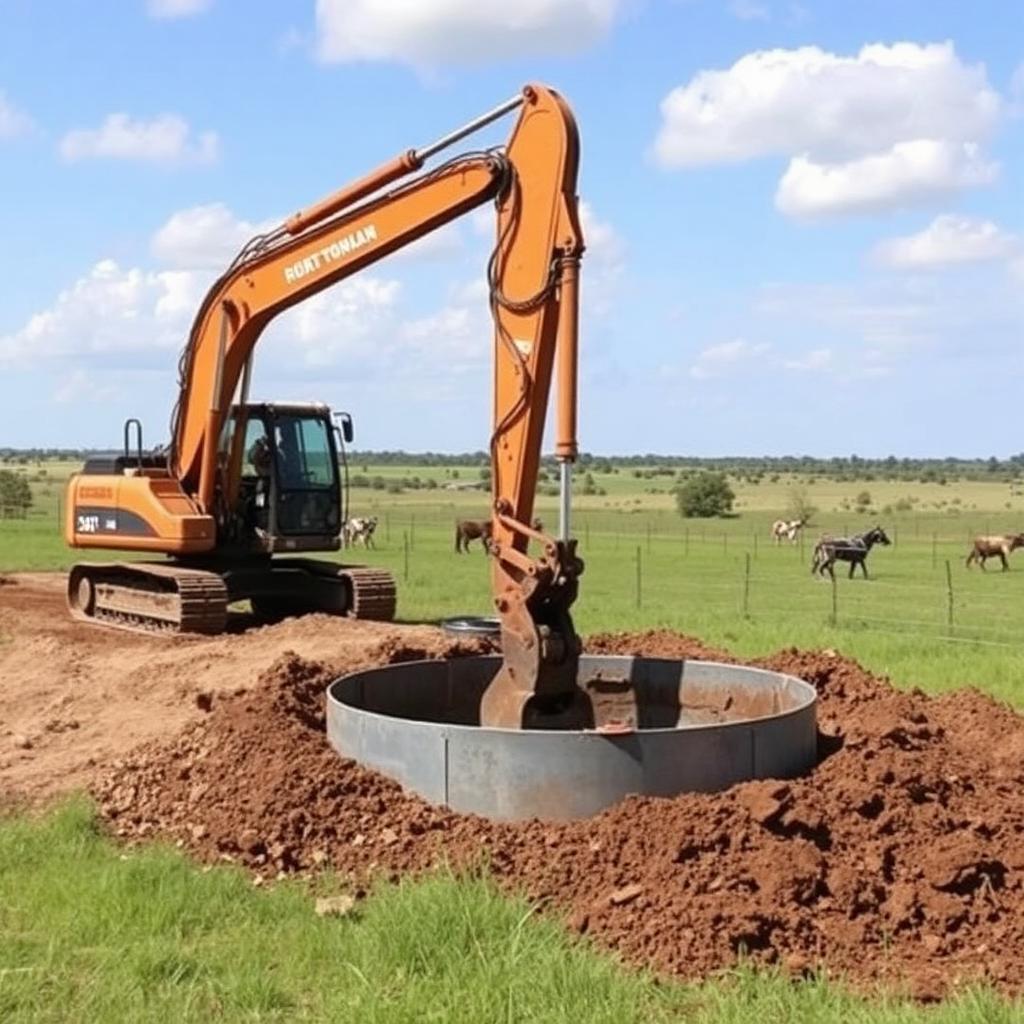
Excavating a tank is not just digging a hole. The shape matters — bottom grade, bank slope, depth, and edge treatment all affect performance. Steep sides become unstable. Shallow tanks lose water fast in dry periods. Poorly shaped banks erode. Work may include removing unsuitable material, shaping the basin, building embankments, grading the surrounding area, and preparing livestock access points.
Erosion Control and Livestock Access
Erosion shortens a tank's life. When bare soil washes in, sediment reduces depth. When banks wash out, the tank becomes hard to maintain. Good erosion control starts with proper grading — water enters and exits in controlled ways, banks are shaped to resist sloughing, and access points are planned so livestock don't destroy the entire edge. In some cases, rock, vegetation, or designated watering areas help reduce wear.
Build a Tank That Works with the Land
A dependable stock tank starts with smart planning. Site selection, drainage, excavation, grading, overflow, and livestock access all affect how well it performs over time.
Mountain Movers Excavation provides cattle stock tank installation, pond construction, excavation, grading, drainage solutions, and ranch dirt work across Central Texas. If you're planning a stock tank near Clifton, Gatesville, McGregor, Meridian, Hico, Coryell County, or surrounding areas, call (254) 640-1104 to request service.
Excavation Contractors near you
Trenching, digging, hauling, and site excavation across Central Texas. Find your town below:
- Excavation services in Waco, TX
- Excavation services in Gatesville, TX
- Excavation services in Killeen, TX
- Excavation services in Temple, TX
- Excavation services in McGregor, TX
- Excavation services in Clifton, TX
- Excavation services in Hillsboro, TX
- Excavation services in Cleburne, TX
Working outside these towns? See our full excavation contractors service or check the Central Texas service area.
Let's Get to Work
Strong foundations start with the right crew. Get professional dirt work, excavation, and site prep from the pros at Mountain Movers Excavation.