

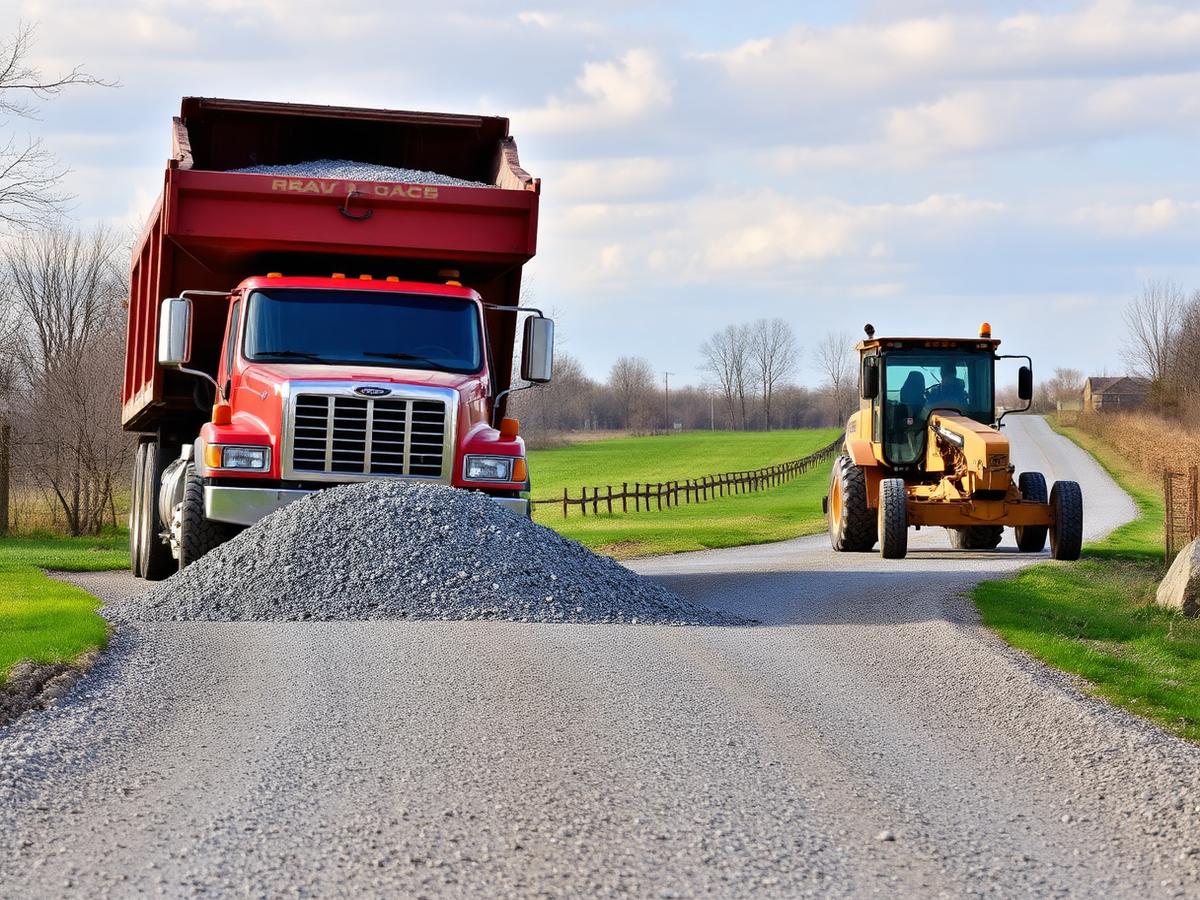
A rough gravel driveway does not always need to be completely rebuilt. Potholes, loose material, minor washboarding, and shallow ruts can often be corrected with targeted grading and resurfacing.
However, repeated failures may indicate that the problem is below the visible gravel. A weak base, poor drainage, an incorrect slope, or unsuitable material can cause the same damage to return after every repair.
For homeowners, ranchers, and rural property owners across Central Texas, knowing whether to repair or replace a gravel driveway can prevent repeated spending on temporary fixes.
When Gravel Driveway Repair May Be Enough
Repair is often appropriate when the driveway has a stable foundation and the damage is limited to the surface — a small number of potholes, minor washboarding, loose gravel along the edges, shallow tire ruts, thin areas that need more material, or light erosion after a storm.
A typical repair may involve reshaping the existing material, restoring the crown or cross-slope, filling damaged areas, adding road base or gravel, and compacting the surface. The work should address the source of the damage whenever possible.
Signs the Driveway May Need More Than Resurfacing
Deep ruts, mud, washouts, lost shape, or widespread potholes
Deep wheel ruts often suggest that the surface or base is too soft for the amount of traffic it receives. Simply filling the ruts may not be enough — the affected section may need to be excavated, reshaped, rebuilt with more appropriate material, and compacted in layers.
Persistent mud can indicate poor drainage, insufficient base depth, or a route that crosses naturally wet ground. Continual gravel washouts often mean water is flowing directly down the driving surface because the crown has flattened or the driveway lacks an effective cross-slope.
When the driveway no longer has a defined crown, edge, or drainage direction — or when potholes cover most of the surface — repeated patching becomes inefficient and reworking the full surface may provide better long-term value.
What Causes Gravel Driveways to Fail?
Gravel is only the visible layer. A durable driveway depends on the complete structure and the surrounding drainage.
- •Poor base preparation — gravel placed directly over soft topsoil or organic material
- •Inadequate drainage — runoff softens the base and carries away fine material
- •Incorrect material — rounded stone shifts under tires; the wrong mix will not lock together
- •Insufficient compaction — loose material shifts under traffic and rainfall
- •Heavy or changing traffic — a driveway built for cars may fail under trailers, feed trucks, or equipment
Repair Options for an Existing Gravel Driveway
Regrading redistributes existing material and restores the driving surface — best when the driveway has enough quality material and a stable base. Resurfacing adds new material after the existing driveway has been shaped, and works when the surface has become thin but the structure remains dependable.
Spot reconstruction addresses soft crossings, shaded low areas, steep sections, and drainage crossings while the rest of the road receives routine grading. Drainage improvements — adding or replacing a culvert, opening a ditch, raising a low section, or reshaping the road — should generally be completed before final surface material is placed.
When Full Replacement Makes Sense
Full reconstruction may be the better option when the driveway route is poorly located, most of the base has failed, the road remains wet for long periods, drainage problems extend across the property, the driveway is too narrow for current use, or years of patching have created an uneven mixture of soil and gravel.
Replacement provides an opportunity to correct the route, width, elevation, base, drainage, and material at the same time — planned around how the property is actually used, including gate placement, trailer turns, parking, building access, and connections to public roads.
Maintaining a Repaired or Rebuilt Driveway
Even a well-built gravel driveway needs periodic attention — grading before minor damage becomes severe, clearing culvert entrances, keeping ditches open, returning loose gravel from the shoulders, filling isolated potholes early, controlling vegetation along the edges, and inspecting the road after major storms.
Regular maintenance is generally easier and less disruptive than waiting until large sections wash out or become impassable.
Fix the Cause, Not Just the Potholes
The decision to repair or replace a gravel driveway depends on what is happening below the surface. Minor wear may only require grading and fresh material. Recurring ruts, washouts, mud, and widespread potholes often point to base or drainage problems that need more substantial work.
Mountain Movers Excavation constructs, repairs, grades, and resurfaces gravel driveways, ranch roads, and access roads throughout Central Texas, including Clifton, Meridian, Laguna Park, Valley Mills, Gatesville, McGregor, Hico, and Hillsboro. Call (254) 640-1104 to discuss your driveway and request service.
Gravel Roads & Driveways near you
We build and grade gravel driveways, ranch roads, and culverts across Central Texas. Pick your town to see how we handle the ground where you are:
- Gravel driveway installation in Waco, TX
- Gravel driveway installation in Gatesville, TX
- Gravel driveway installation in Killeen, TX
- Gravel driveway installation in Temple, TX
- Gravel driveway installation in McGregor, TX
- Gravel driveway installation in Clifton, TX
- Gravel driveway installation in Hillsboro, TX
- Gravel driveway installation in Cleburne, TX
Working outside these towns? See our full gravel roads & driveways service or check the Central Texas service area.
Let's Get to Work
Strong foundations start with the right crew. Get professional dirt work, excavation, and site prep from the pros at Mountain Movers Excavation.