A gravel road should make your property easier to access — not become a headache every time it rains. For many landowners across Central Texas, washed-out roads, potholes, ruts, and standing water are common signs that a driveway or ranch road was not built with proper drainage.
The good news is that most gravel road problems can be prevented with the right base, grading, compaction, and culvert placement.
Why Gravel Roads Fail
Most failures come back to one issue: water. When water sits on the surface, runs down the center of the road, or crosses a driveway without a proper outlet, it moves gravel and base material. Small ruts become deep washouts. Low spots turn into mud holes. Edges break down. In rural areas near Clifton, Gatesville, Hico, Meridian, and Coryell County, long private drives handle trucks, trailers, tractors, and livestock traffic — which means the road needs more than a thin layer of rock. It needs structure.
The Role of Proper Grading
Crowns, side slopes, ditches, and swales
A properly graded road is shaped to shed water. A crowned road is slightly higher in the center and slopes down toward both sides, allowing rainwater to move off instead of pooling. Where land naturally falls one direction, a side slope directs water to a ditch or swale. Ditches and swales must be shaped correctly so they move water without eroding into the road base.
Why Road Base Matters
A long-lasting gravel road starts below the surface. If the base is too soft, too thin, or poorly compacted, the road will rut quickly. Adding more gravel on top hides the problem temporarily — it does not fix it. A strong road usually requires site prep, removal of unstable material, proper road base, layered spreading, compaction, and final grading for drainage.
How Culverts Protect Roads and Driveways
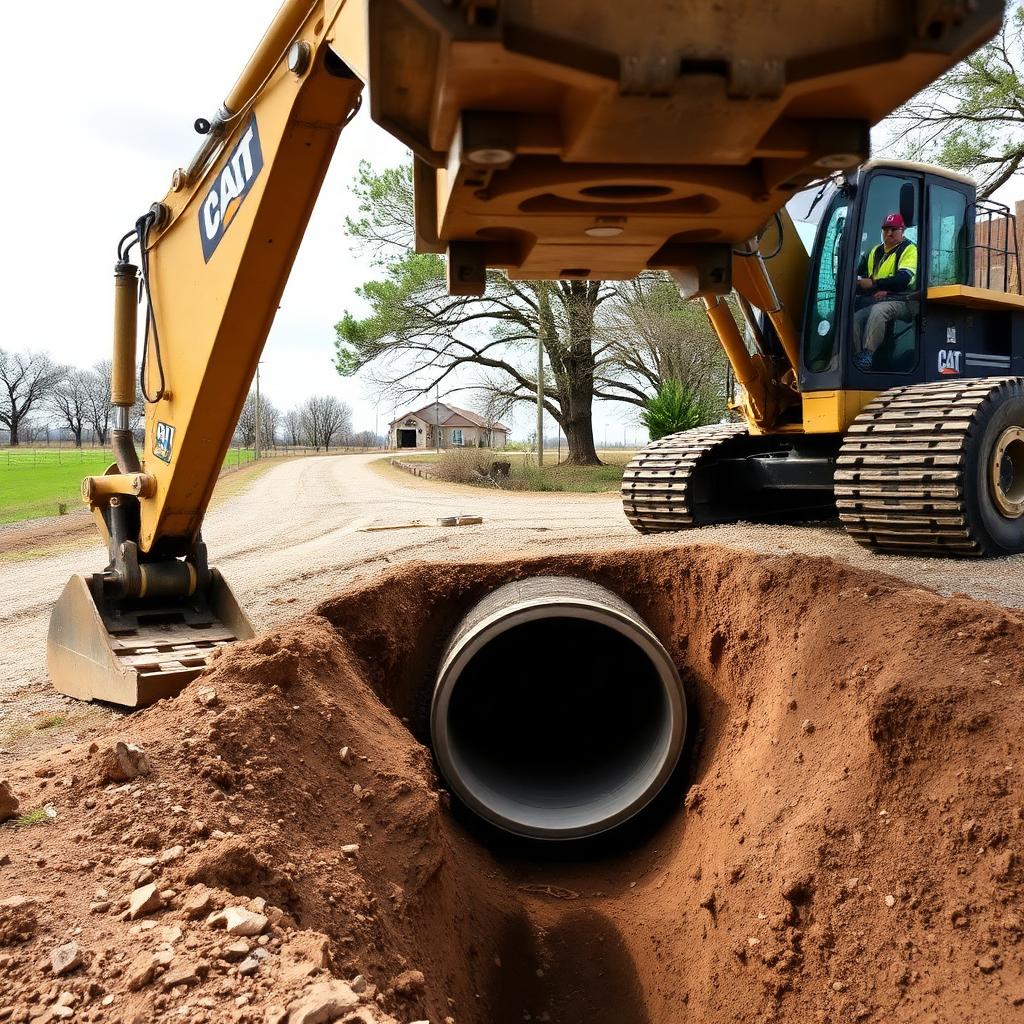
Culverts move water under a road instead of across it. Without one in the right spot, heavy rain can cut across the surface and carry gravel away. You may need a culvert if water crosses your driveway during rain, if a low-water crossing keeps washing out, if gravel disappears after storms, if water pools along one side, or if a ditch or natural drainage path crosses the access route. Proper installation includes correct sizing, slope, bedding, backfill, and grading — a culvert that's too small or shallow can still flood the road.
Repairing an Existing Gravel Road
A real repair starts with the cause, not just the surface. Potholes are often standing water. Washouts are missing drainage. Ruts are weak base or poor compaction. Edge breakdown happens when water has no clear place to go. A proper repair may include regrading, replacing base material, installing a culvert, cleaning drainage paths, compacting, and reshaping the road. Spreading new gravel over the top looks good for a few weeks — then the same problems come back.
Build the Road Around the Water
Control the water before it controls the road. With proper grading, a solid base, good compaction, and the right culverts, your driveway or ranch road can hold up through Central Texas weather and regular use.
Mountain Movers Excavation provides gravel road work, driveway repair, grading, culvert installation, and drainage solutions across Central Texas, including Clifton, Gatesville, McGregor, Meridian, Hico, Coryell County, and surrounding communities. Call (254) 640-1104 to request service.
Gravel Roads & Driveways near you
We build and grade gravel driveways, ranch roads, and culverts across Central Texas. Pick your town to see how we handle the ground where you are:
- Gravel driveway installation in Waco, TX
- Gravel driveway installation in Gatesville, TX
- Gravel driveway installation in Killeen, TX
- Gravel driveway installation in Temple, TX
- Gravel driveway installation in McGregor, TX
- Gravel driveway installation in Clifton, TX
- Gravel driveway installation in Hillsboro, TX
- Gravel driveway installation in Cleburne, TX
Working outside these towns? See our full gravel roads & driveways service or check the Central Texas service area.
Let's Get to Work
Strong foundations start with the right crew. Get professional dirt work, excavation, and site prep from the pros at Mountain Movers Excavation.